The Question Most People Ask About Window Tint (And the One They Should Be Asking)
When customers call or come into either of our locations — Tukwila for the Seattle and Eastside area, Monroe for Snohomish County — the first question is almost always the same:
"How dark can I go?"
It's a reasonable question. Darkness is the most visible thing about window tint. But after years of installing tint on everything from daily commuters to high-end exotics, we can tell you that darkness percentage is one of the least important decisions you'll make about your tint. The question that actually affects your daily life is different.
The question you should be asking: what does the film actually do?
Why Darkness Isn't the Decision
Washington State law sets the baseline: front side windows must let in at least 24% of visible light. On sedans and other passenger cars, that same 24% minimum also applies to the rear side windows and the rear window. SUVs, trucks and vans (vehicles the manufacturer classifies that way) can go darker on the windows behind the driver, as long as the vehicle has outside mirrors on both sides.
So on front windows, you're working within a defined range regardless of what you want. The legal limit is the legal limit. What varies dramatically is everything else — how much heat the film rejects, how much UV it blocks, how it performs on overcast days versus direct sun, and how long it lasts before it starts to degrade.
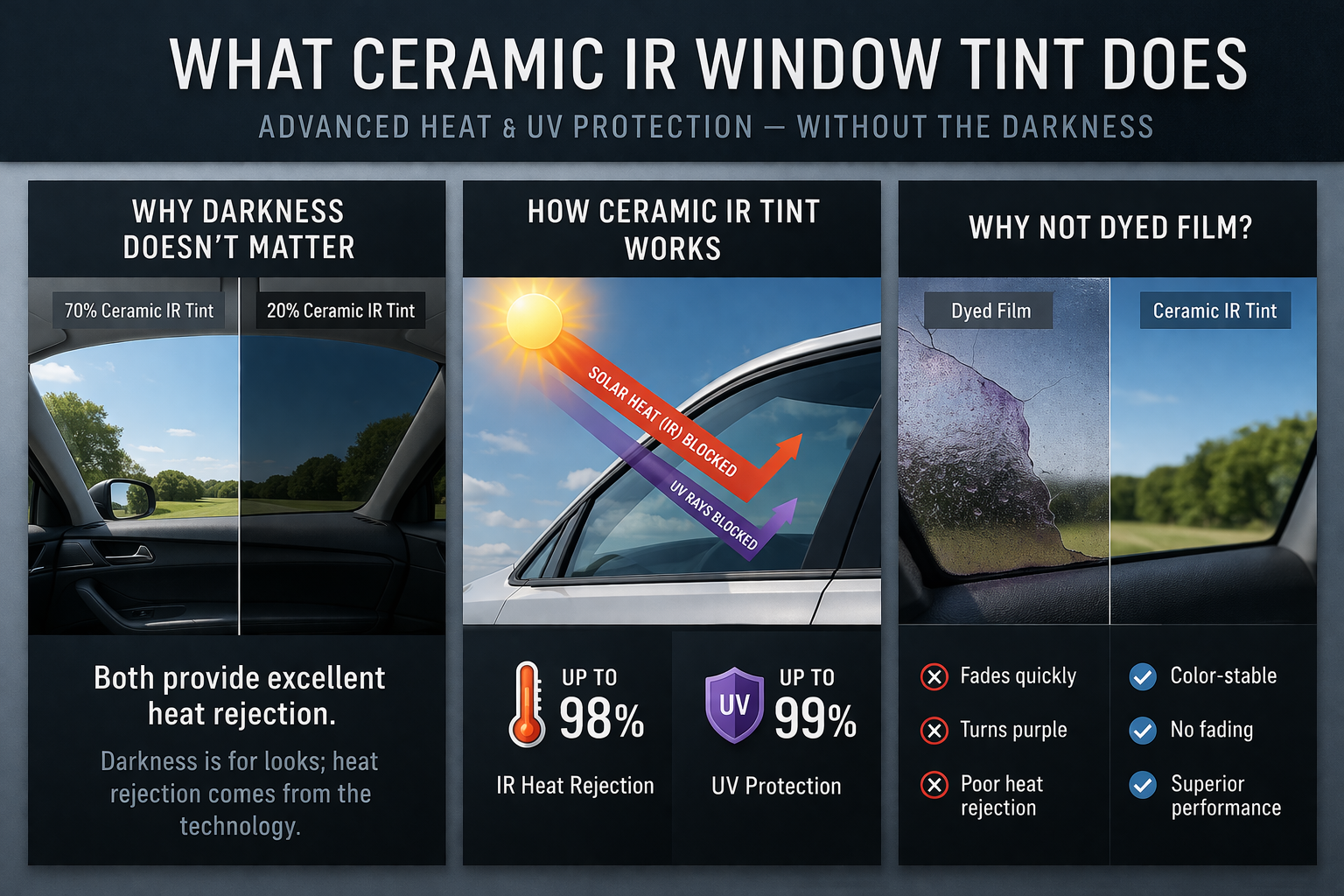
Two films can look identical at 35% VLT and perform completely differently. One absorbs heat and transfers it into your cabin. The other rejects it before it ever gets through the glass. One fades and turns purple in three years. The other looks the same on day one as it does in year ten. That difference has nothing to do with how dark the tint looks.
What Ceramic IR Tint Actually Does
We install KAVACA Ceramic IR window tint by Ceramic Pro at both our Tukwila and Monroe locations. Here's why that matters for drivers in the Pacific Northwest specifically.
Ceramic IR film uses nano-ceramic particles instead of dye. Those particles don't absorb solar energy — they reject it. The practical result is heat rejection that standard dyed film simply cannot match. KAVACA Ceramic IR blocks up to 96% of infrared radiation — the heat you feel even on a partly cloudy day, the heat that makes your steering wheel too hot to touch after sitting in a parking lot, the heat that runs your AC harder on every summer commute.
For Seattle-area drivers on I-5, I-405, and the Eastside corridors — where summer afternoons in open commercial parking can get genuinely hot despite what people assume about Pacific Northwest weather — that heat rejection is something you feel immediately and every day.
For Snohomish County drivers on US-2 or the I-5 corridor north of Everett, the UV protection is equally relevant. KAVACA Ceramic IR blocks 99% of UV radiation. Every clear day your vehicle sits in the Snohomish Valley sun, UV is working on your dashboard, your leather, and your interior trim. Ceramic IR tint stops that degradation before it starts.
The Dyed Film Problem
Standard dyed window tint is what most budget shops install. It works — for a while. The dye absorbs solar energy rather than rejecting it, which means the film itself gets hot and transfers heat into your cabin. More importantly, UV radiation breaks down the dye over time. You've seen it: the purple or brownish cast on older tinted cars. That's dyed film that's degraded. It typically happens within three to five years, faster in climates with significant UV exposure.
In the Pacific Northwest, the repeated thermal cycling — cold wet winters followed by warm dry summers — accelerates this breakdown. You end up replacing dyed film significantly sooner than you would in a more consistent climate, which means the apparent cost savings disappear over time.
Ceramic IR film doesn't have a dye to break down. The nano-ceramic particles are stable. The film performs the same in year five as it did on installation day.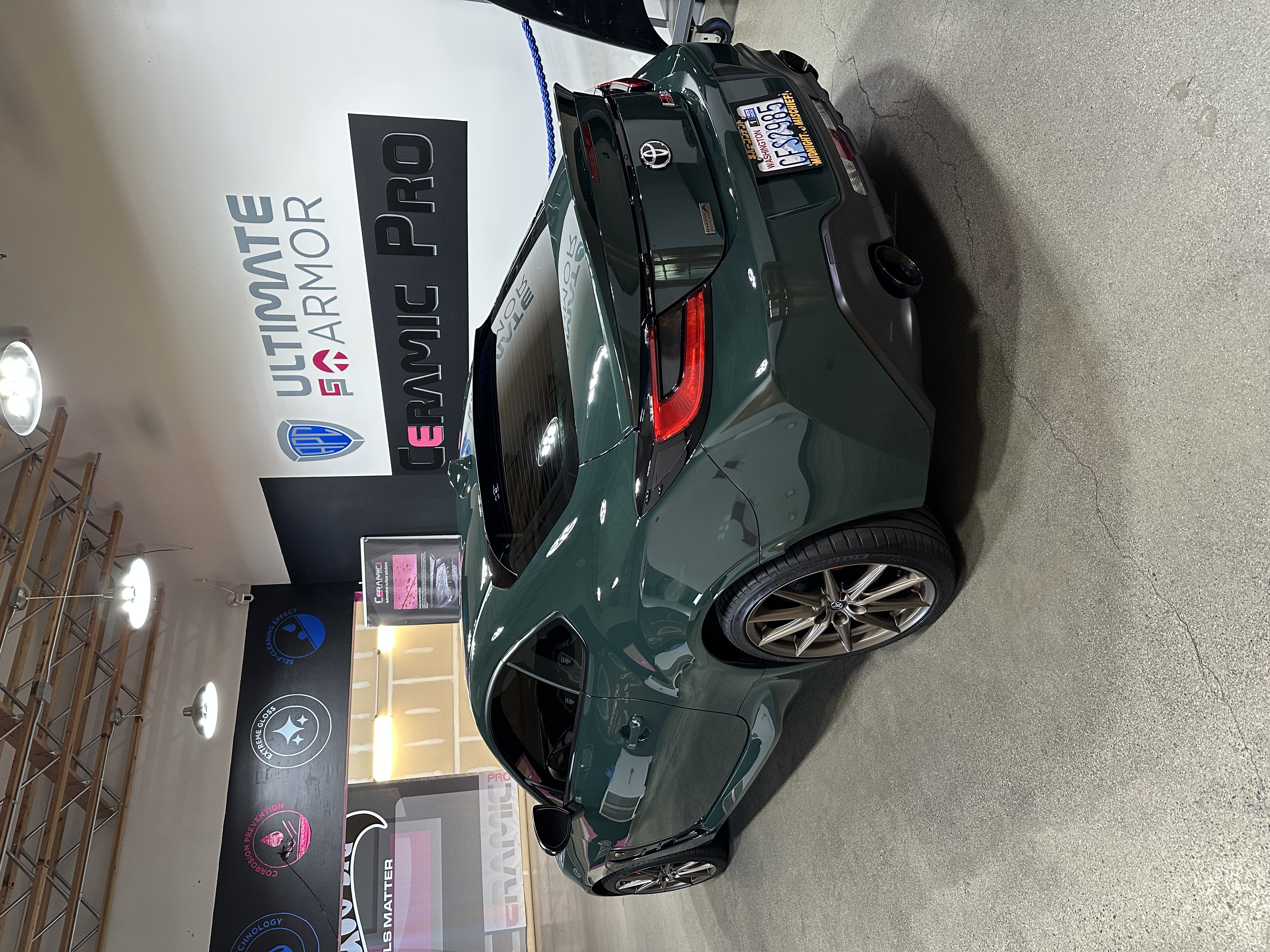
What the Darkness Conversation Should Actually Look Like
When customers come into our Tukwila or Monroe shop, we don't lead with darkness percentages. We ask a few questions first:
How long are you planning to keep the vehicle? If you're selling in eighteen months, your priorities are different than someone who just bought a truck they plan to drive for a decade.
How much time do you spend in the car? A Bellevue tech worker doing a daily I-405 commute in a black SUV has a very different heat exposure profile than someone who drives occasionally and garages their vehicle.
What matters more to you — privacy, heat rejection, UV protection, or aesthetics? The answer shapes everything from film choice to VLT percentage on windows where you have options.
On front side windows, Washington law gives you a defined range. On rear windows, you have full flexibility — and for drivers who want maximum privacy or heat protection in back seats, going darker on rear glass is often the right call. For families with kids, blocking UV in the back seat is a genuinely practical health consideration.
We walk through all of this before we ever talk about a specific product. Because the right tint for a Kirkland resident with a new Tesla Model Y is different from the right tint for a Monroe contractor driving a full-size truck on US-2 every day.
Both Locations, Same Standard
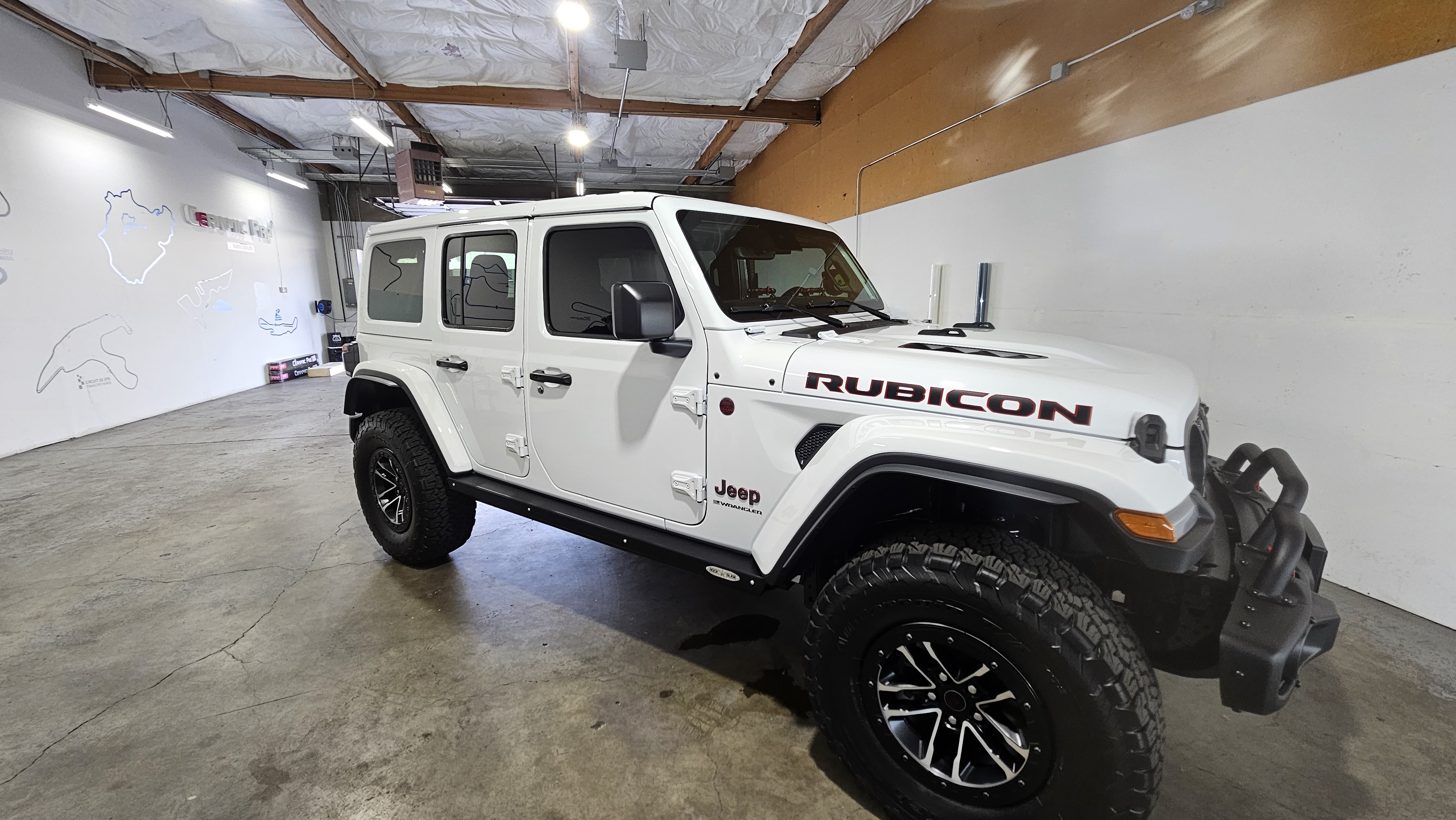
APC Auto Spa installs KAVACA Ceramic IR at our Tukwila location serving Seattle, Bellevue, Renton, Kirkland, Redmond, Kent, SeaTac, and Burien — and at our Monroe location serving Snohomish, Lake Stevens, Marysville, Everett, Arlington, Mukilteo, and the surrounding Snohomish County area.
Every installation is done in-house by our trained technicians. We don't outsource. We don't rush. Every edge is finished the way we'd want our own vehicles finished.
If you're thinking about window tint and want a straight answer about what's right for your vehicle, call us at 425-818-2820 or get a quote at apcautospa.com. We'll ask the right questions and give you a real recommendation — not just a darkness chart.
Serving the Seattle and Snohomish County Area APC Auto Spa Tukwila: 1050 Industry Drive, Tukwila, WA 98188 Monroe: 14286 169th Drive SE, Monroe, WA 98272 425-818-2820 | apcautospa.com